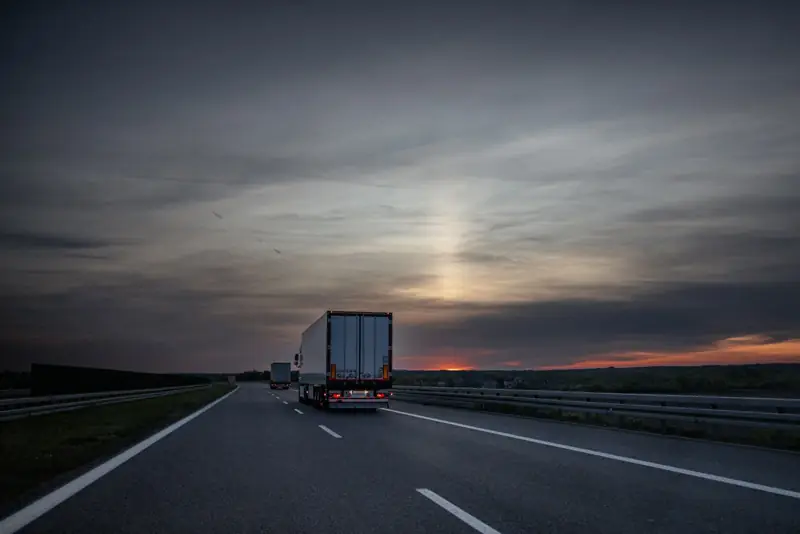
It is not science fiction anymore. Aurora began hauling freight with driverless trucks in Texas, and by early 2026 it had validated five lanes, including Dallas to Houston, Fort Worth to El Paso and El Paso to Phoenix. The company said it expects more than 200 driverless trucks on the road by the end of 2026.
So should you worry?
What driverless trucks can do today
- Drive long, mostly straight interstate lanes between big terminals.
- Run in good weather, on mapped routes, in states that allow it.
- Hand freight off to human drivers at terminals near cities.
What they cannot do (yet)
- Back into a tight dock in a city, deal with a shipper who changes the plan, or chain up in snow.
- Run local delivery, dedicated store routes, flatbed securement, tanker, livestock, oversize, or anything that needs hands.
- Operate everywhere. States still set most of the rules, and a national framework is still being written.
Our honest prediction
- Next 3 to 5 years: a few hundred to a few thousand autonomous trucks on specific Sun Belt lanes. There are about 2.2 million heavy truck drivers in the U.S. today. The effect on the overall job market will be small.
- Long, boring interstate lanes are where automation shows up first. Some long-haul dry van work will change.
- Local, regional, dedicated and specialized jobs are the safest, and they are also where pay has been strongest. More "first mile / last mile" driving jobs may actually appear around autonomous terminals.
What to do with this
If you are early in your career, build skills that a computer struggles with: tight urban deliveries, flatbed, tanker, hazmat, customer-facing dedicated accounts. Those are the jobs carriers will need humans for the longest.
Source: Transport Topics: Aurora Q4 2025 results and plans (Feb 2026)
Want a recruiter who answers these questions before you ask?
Tell us 4 things and we match you with CDL-A jobs you can actually get. Free for drivers.